
Last updated November 15, 2026
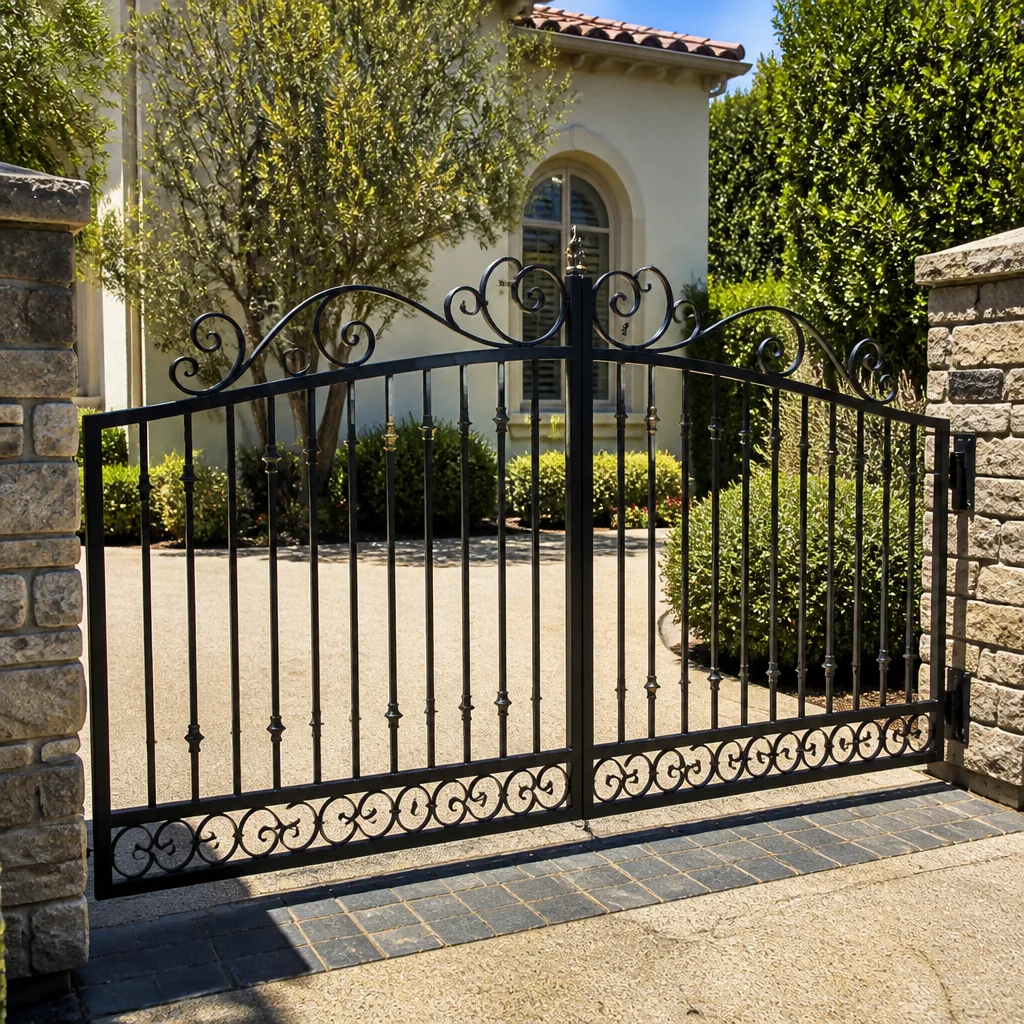 Wrought iron
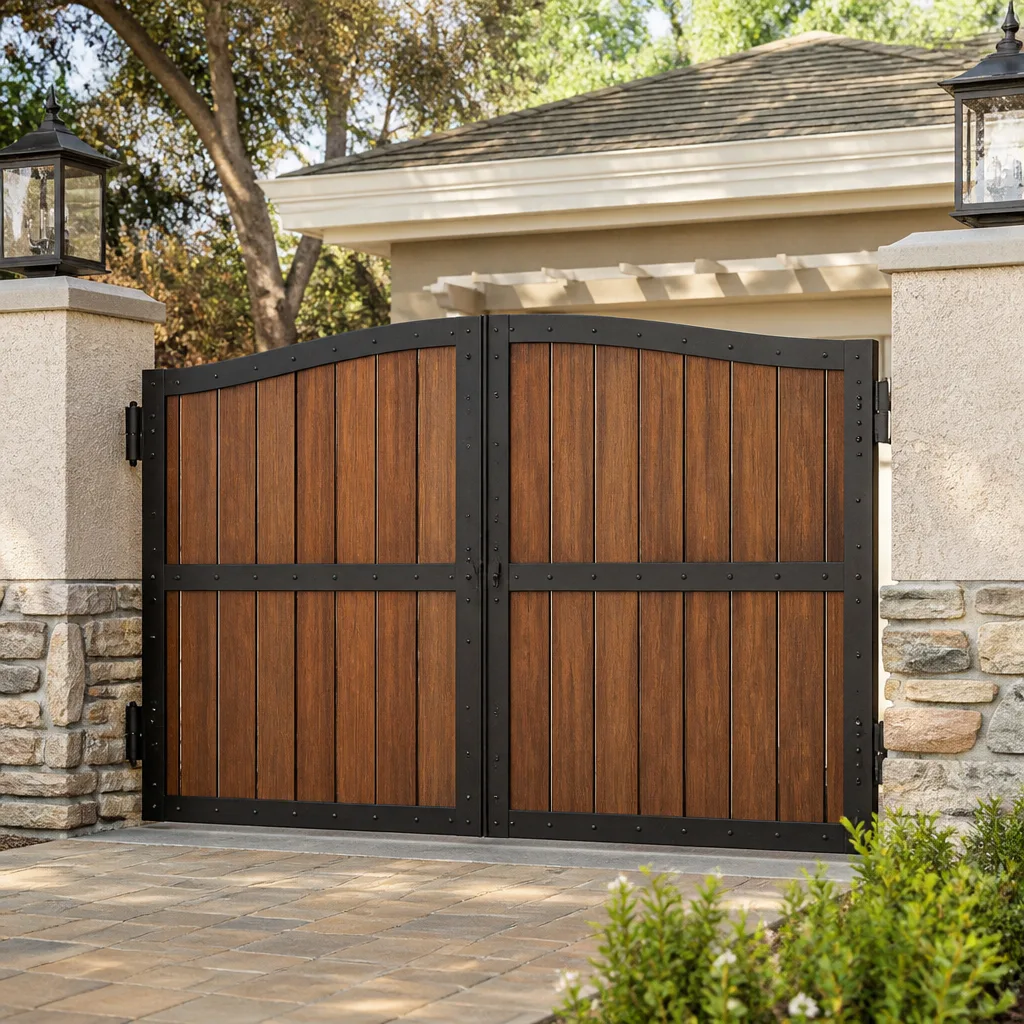 Wood & steel frame
 Farm & ranch
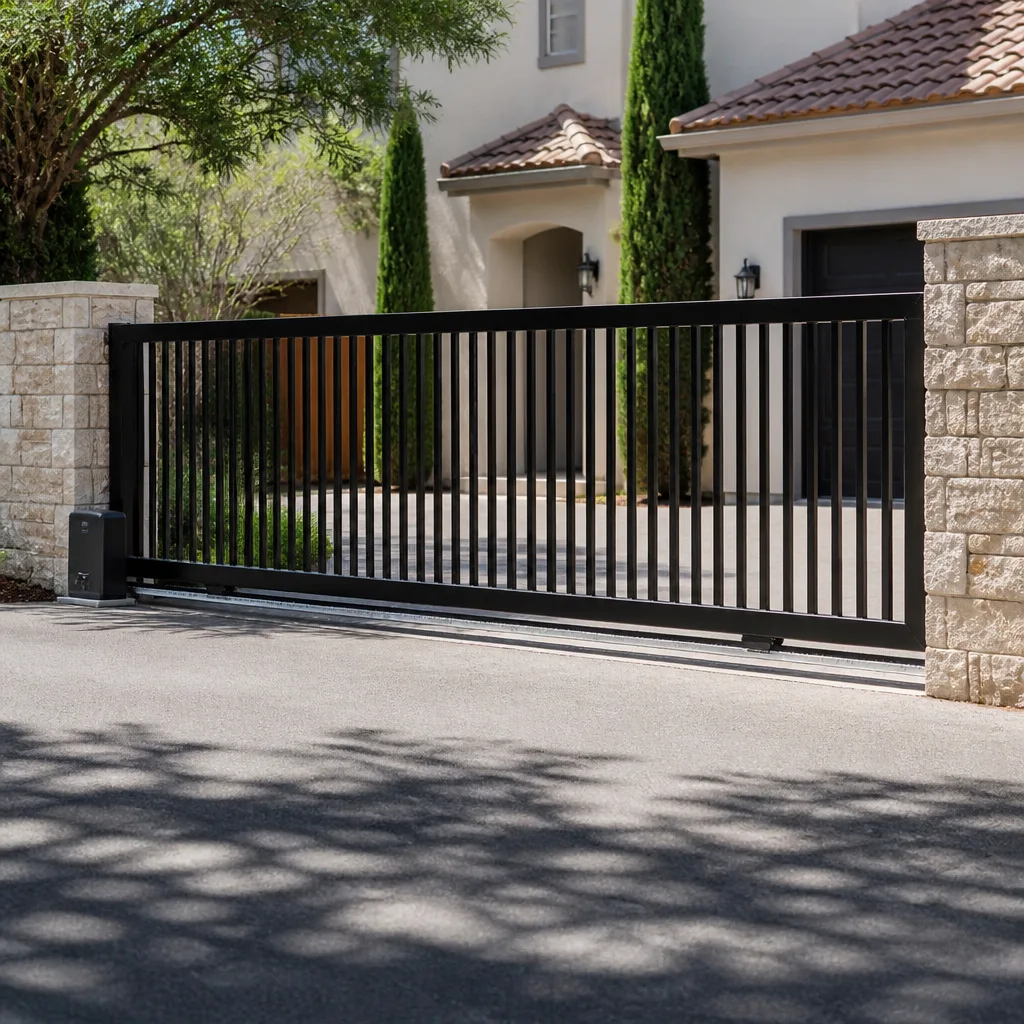 Sliding driveway gates
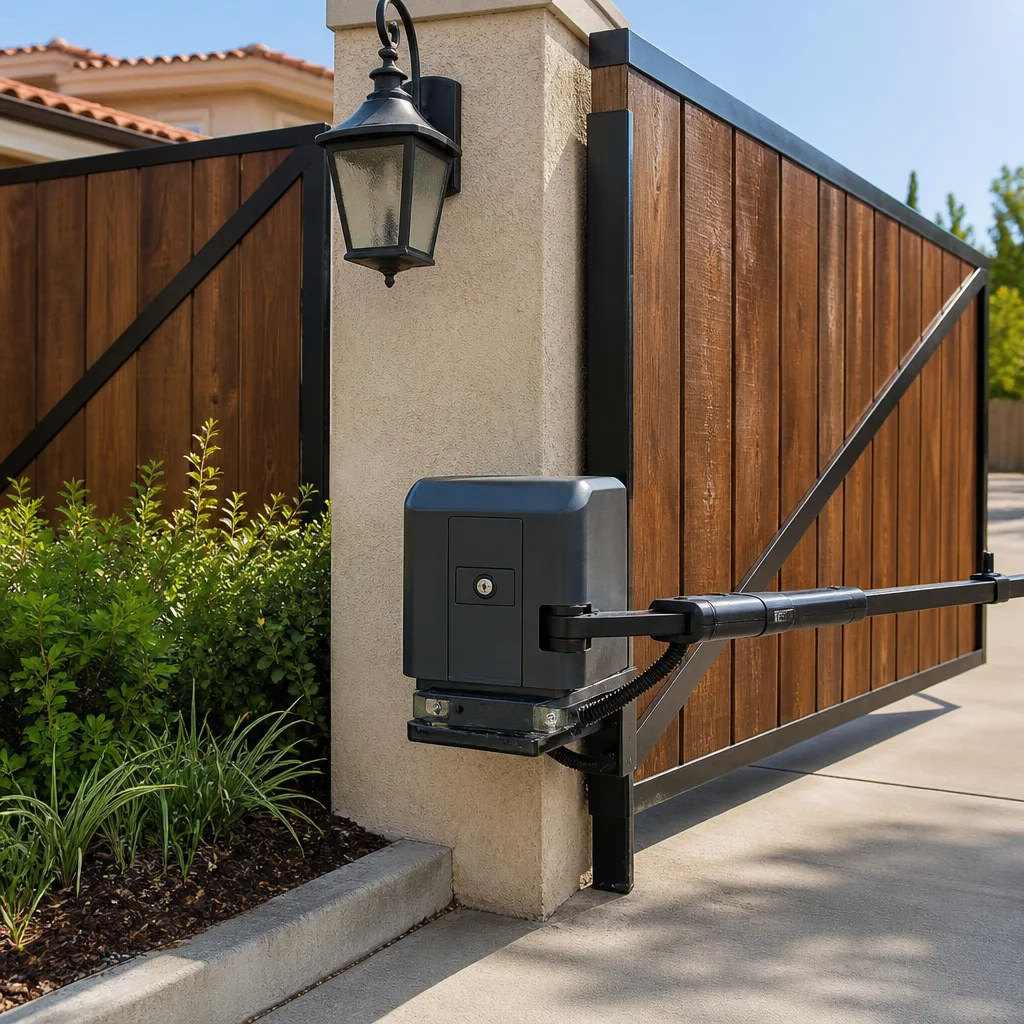 LiftMaster operators
Free on-site gate assessment - hinges, posts, and your LiftMaster or Nice gate operator checked before anything is quoted
The assessment is free and the quote is the invoice.
Get your free estimateGate Repair Troubleshooting in Gresham: Common Problems and How to Fix Them
The most common “gate motor failure” call we get in Gresham isn’t a motor failure at all. More often it’s a tripped safety loop, a loose wire at a terminal block, or a transformer that quietly gave up. Those are small fixes. Replacing an operator that was never broken is not. Gate systems fail in patterns, and almost every problem traces back to one of four root causes: power, signal, mechanical wear, or misalignment. This guide walks through each category with the symptoms that identify it, the brand-specific clues that point you toward the fix, and the mistakes that turn a $40 problem into a $400 one.
Quick Answer
Most gate problems in Gresham come down to power, signal, mechanical wear, or misalignment, and you can usually narrow it down before anyone touches a wrench. Start by checking whether the operator has power and whether anything is blocking a safety device, then look at the gate’s physical movement. Intermittent failures almost always point to wiring connections or a failing control board, not the motor itself. If the gate moves freely by hand and the operator still won’t run, the problem is electrical or in the control logic. Call (866) 942-6384 for a free estimate if you get stuck.
Styles & brands we work with
- Wrought iron
- Wood & steel frame
- Farm & ranch
- Sliding driveway gates
- LiftMaster operators
Table of Contents
- The Four Root Causes of Gate Failure
- Category 1: Power Problems
- Category 2: Signal and Safety Device Problems
- Category 3: Mechanical Wear
- Category 4: Misalignment
- Why a Gate That “Works Sometimes” Is Almost Never a Motor Problem
- Brand-Specific Diagnostic Clues
- The Safety Check Most Gresham Homeowners Skip
The Four Root Causes of Gate Failure
Every gate problem we diagnose falls into one of four categories. Learning to sort your symptom into the right one saves you from replacing parts that were never the problem. Here’s how the categories break down:
- Power: The operator isn’t getting electricity, or it’s getting the wrong amount. Symptoms: completely dead gate, no lights on the control board, a transformer that’s warm or silent.
- Signal: A safety device or remote is telling the operator to stop or reverse. Symptoms: gate opens but won’t close, gate reverses mid-travel, remote works inconsistently.
- Mechanical: Something physical is worn, bent, or broken. Symptoms: grinding, squealing, a gate that moves but catches or drags.
- Alignment: The gate has shifted on its hinges or track so the operator can’t complete its cycle. Symptoms: gate stops partway, hits the post, or the latch won’t engage.
In our experience across Gresham, power and signal problems account for the majority of service calls, and they’re usually the cheapest to fix. Mechanical and alignment issues tend to build up slowly. A gate that’s been dragging for months is a gate that eventually strips a gear or burns out an operator. Catching the category early is the whole game.
One more thing worth knowing: most residential driveways in Gresham sit on slopes or uneven ground, and that matters for diagnosis. A gate on an incline puts more load on the operator and wears hinge hardware faster than a flat-lot install. If you live on a hill, mechanical issues will come up more often, and the operator has to be rated for the grade.
Category 1: Power Problems
Start every diagnosis with power. A gate operator that has no lights on its control board isn’t broken – it’s unpowered, and that’s a different problem entirely. Here’s the check order we use:
- Look at the control board. Most operators have a status LED that stays lit when the board has power. No light means no power reaching the board.
- Check the breaker. Gate operators usually run on their own dedicated circuit. A tripped breaker is common after a storm or a power surge.
- Check the transformer. If the board has no light but the breaker is fine, the transformer is the next suspect. A failing transformer can put out low voltage that’s not enough to run the operator but enough to keep a faint LED on. That’s the sneaky failure mode.
- Check the battery backup. Many modern operators include a battery that takes over during a power outage. A dead battery can drag the whole system down or cause the operator to behave erratically.
- Check the run of low-voltage wire. If the operator is a fair distance from the house, the wire run is a common failure point. Rodent damage, water intrusion at a splice, or a buried line that’s been nicked by digging all show up as intermittent power.
Here in Gresham, we see a specific pattern with power: winter rain gets into exterior control boxes and corrodes connections, and the wet season lasts long enough that the corrosion has months to work. If your gate problem shows up every fall, suspect water intrusion before you suspect the motor.
If your gate is completely dead, that’s the simplest category to confirm. If it has power but won’t run, move to signal. Call (866) 942-6384. We answer 24/7, and we can talk you through the first checks before anyone comes out.
Category 2: Signal and Safety Device Problems
This is the category that produces the most “my gate motor is failing” calls, and it’s almost always a safety device doing its job. Gate operators have two main safety systems, and each fails in a different way.
Photo eyes
Photo eyes are the paired sensors mounted on either side of the gate opening. One sends an infrared beam, the other receives it. If the beam is broken or the eyes are misaligned, the operator refuses to close the gate. That’s the protection working as designed, but it looks exactly like a gate that’s “stopped working.”
You can test photo eyes without any special equipment. Stand between the eyes while the gate attempts to close. If the gate reverses or refuses to close, the eyes are active and working. Then check for the obvious culprits: spider webs, leaves, dirt on the lens, or a sensor that’s been knocked slightly out of alignment by a car or a bump. A photo eye that’s drifted a quarter inch off target will read as broken. If your gate opens fine but won’t close, photo eyes are the first thing to check.
Loop detectors
Loop detectors are the wire loops buried in the driveway that sense a vehicle. A loop that’s been damaged by settling ground, root growth, or driveway repairs can fail in one of two ways: it either senses constantly (gate won’t close) or it senses nothing (gate won’t open for a car). Testing a loop by hand is harder than testing photo eyes because you can’t see it. If you have a loop and your gate ignores vehicles but responds to the remote, the loop is suspect. Loop failures are more common in Gresham’s older driveways where the asphalt or concrete has been patched or shifted over the years.
Limit switches
Limit switches tell the operator when the gate has reached fully open or fully closed. A faulty limit switch makes the gate overshoot its stop point or stop short. You can usually spot a limit issue visually: the gate hits the physical stop and the operator keeps running for a moment, then reverses. If the gate stops in the wrong position every time, that’s a limit switch, not a motor.
If your automated gate isn’t responding, we specialize in exactly that. Whether you have a Viking operator with a stubborn limit switch or a Ghost Controls system with an unresponsive remote, the electric gate repair side of our work starts with signal. Call (866) 942-6384 for a free estimate.
Category 3: Mechanical Wear
Mechanical wear is the category you can usually hear. A gate that grinds, squeals, or shudders is telling you exactly where the problem is. The most common mechanical failures:
- Worn hinges: Hinge pins wear out, the gate sags, and the operator has to fight gravity every cycle. This is the slow cause of most operator failures on swinging gates.
- Bent or worn arms: On swing gates, the arm connects the operator to the gate. A bent arm throws off the whole geometry, and a worn arm produces a rattle or a slipping feel.
- Worn rollers and tracks: On sliding gates, rollers wear flat spots or the track gets damaged by debris. A gate that jumps or wobbles as it slides needs the rollers and track looked at before the operator.
- Chain stretch: Sliding gate chains stretch over time and eventually skip the sprocket. If you hear a skipping sound at one point in the travel, chain tension is the first suspect.
- Stripped gears: A gear that’s stripped inside the operator sounds like a motor running free with no movement. That’s a mechanical failure inside the unit, and it usually follows months of a gate that was dragging and never got attention.
Here’s the point most homeowners miss: mechanical wear is the category that damages the operator. A gate that fights the operator every cycle burns through motors, control boards, and gear sets. Fixing the hinge or roller problem first means you don’t replace the same expensive part twice. For Gresham properties, we recommend having hinges, rollers, and chain tension checked as part of routine upkeep, especially on gates that have been in service for years.
If you’re hearing something and you’re not sure what, a look at the mechanicals is the cheapest diagnosis you can get. gate repair starts with the physical inspection for exactly this reason.
Category 4: Misalignment
Alignment is the quiet one. Nothing is broken, nothing is worn out, but the gate has shifted just enough that the operator can’t complete its cycle. Common causes include:
- Posts that have settled over time, especially on Gresham’s clay-heavy soil, which moves with the wet and dry seasons.
- A gate struck by a vehicle or hit by a gust of wind that pushed it off square.
- Hinge hardware that’s loosened, letting the gate sag a half-inch at the latch side.
- A driveway that’s shifted or cracked, throwing off a track or a loop location.
The test for alignment is simple. Disengage the operator (most have a manual release) and swing or slide the gate by hand through its full travel. If it binds, scrapes, or stops at any point, you have an alignment problem. If it moves freely and easily, your problem is in the operator or the power and signal categories. That hand test is the single most useful diagnostic move a homeowner can make, and it costs nothing.
Alignment issues are also where a gate becomes a safety problem. A gate that’s shifted can create a gap below the gate that a child or a pet can slip under, or a leaning gate that traps a hand. Don’t wait on alignment problems. If your gate won’t latch or drags at the post, call (866) 942-6384 for a free estimate.
Why a Gate That “Works Sometimes” Is Almost Never a Motor Problem
A gate that works fine one day and dead-stops the next is the diagnostic case we get asked about most. In our experience, intermittent behavior points away from the motor and toward one of two specific failures.
Loose wiring connections. A terminal block screw that’s backed off a quarter turn, a wire nut that’s worked loose, or a splice that’s corroded – all of these produce a connection that makes contact sometimes and doesn’t other times. The gate runs fine until the wire moves, then it doesn’t. Temperature changes, wind, gate vibrations, and seasonal ground movement all cause the connection to shift. This is the most common cause of “works sometimes” and it’s also the cheapest to fix. Wiring connections are worth checking before anything else.
A failing control board. Control boards develop intermittent faults as components age. Capacitors and relays can fail gradually, producing erratic behavior that comes and goes with temperature or with the number of cycles the gate has run that day. A board that behaves differently when it’s warm versus cold is a board that’s on its way out.
What makes this category tricky is that the gate will often “fix itself” right when the technician arrives. That’s not a surprise – it’s the symptom. Intermittent failures are the ones that require a careful, methodical check rather than a quick part swap. If your gate works sometimes, we can diagnose the connection or the board. Call (866) 942-6384 for a free estimate.
Brand-Specific Diagnostic Clues
Brands don’t fail the same way, and knowing the specific failure pattern for your operator saves a lot of time. Here are the clues we look for across the brands we service, including LiftMaster, FAAC, BFT, Linear, Viking, Ghost Controls, DoorKing, Elite, and Mighty Mule.
LiftMaster error codes
LiftMaster operators display error codes on the control board or via a diagnostic LED. The codes point toward specific categories: a code that indicates the safety device means checking the photo eyes first, a code that indicates the limit means checking the limit switches, and a code that indicates a motor or board fault means the problem is inside. Write the code down before anything is changed. The code is the fastest path to the right part, and a technician who skips it is guessing.
Linear fault blinks
Linear operators communicate through a sequence of LED blinks. A specific number of blinks in a repeating pattern corresponds to a specific fault, and the blink code is the first thing to read. A single blink, a double blink, and a triple blink all mean different things. If you’re standing at the gate when it fails, count the blinks and repeat the count. That one observation can narrow the diagnosis before the technician opens the housing.
FAAC diagnostic LED patterns
On FAAC systems, the diagnostic LED on the board tells you whether the operator sees any obstruction in the safety circuit, whether a limit has been reached, or whether the board has a logic fault. FAAC boards are more common on commercial access gates, and reading their LED patterns requires knowing the specific sequence for the model. That’s the kind of detail that separates a gate specialist from a generalist.
Beyond these three, we run diagnostics on Viking, Ghost Controls, DoorKing, Elite, and Mighty Mule systems as well. The budget brands like Mighty Mule and Ghost Controls often have simpler boards and fewer diagnostic indicators, so the diagnosis relies more on the hand test and a multimeter. Commercial-grade systems like DoorKing and FAAC tend to have more diagnostic features that point directly at the fault category. We work on nearly every major gate brand, including yours – regardless of which one you own, we know the hardware. For a diagnostic look at your specific system, call (866) 942-6384 for a free estimate.
The Safety Check Most Gresham Homeowners Skip
There’s one safety check that’s almost never done and it’s the one that causes the most entrapment-related service calls: testing the gate’s auto-reverse function. Every automatic gate must reverse when it meets an obstruction during closing. That’s the safety feature that prevents a gate from crushing a person, a child, or a pet.
Most homeowners never test it because it’s not a “my gate is broken” symptom. The gate works fine, so nobody checks whether the safety system still works. But auto-reverse depends on the photo eyes, the loop detector, and the operator’s internal force sensing all working together, and any one of those can fail silently. A gate that closes normally but doesn’t reverse on contact is a gate that’s one failure away from an injury.
Here’s how to check it safely. With the gate closing, pass an object through the photo eye beam. The gate should stop and reverse. If it doesn’t, the safety circuit has a problem. Then test the force sensing: on most operators you can do this by lightly holding the gate as it closes. It should reverse within a moment. If the gate pushes through, the force setting is wrong or the sensing is failing. Do not test auto-reverse by putting your hand or body in the path of a closing gate. Test with a firmly held object or have a trained technician check it. Gates are heavy. The reason this matters is that an entrapment injury is a serious one, and this is not a feature to test by hand.
We run this safety test as part of every service call, and we recommend Gresham homeowners test it once a season. If your auto-reverse check doesn’t behave the way it should, call (866) 942-6384 for a free estimate. We answer 24/7. Fast dispatch from 7am to 7pm, Sunday through Friday.
Common Mistakes to Avoid
- Replacing the operator before testing the safety devices. The most common mistake by a wide margin. A gate that won’t close because of a dirty photo eye doesn’t need a new motor – it needs the lens wiped clean. Check photo eyes and loops before anything else.
- Ignoring the hand test. If you never disengage the operator and move the gate by hand, you’ll never find an alignment or mechanical issue. The hand test takes two minutes and separates four categories of problem instantly.
- Swapping a control board when the problem is a wire. Loose connections and control board failures look identical from the outside, but they’re priced very differently. Check the wiring first. A connection that’s backed off produces the same symptom as a dead board.
- Patching a loop without diagnosing it. Cutting into concrete to repair a loop before you’ve tested whether the loop is actually the fault is expensive and often wrong. Test first, dig second.
- Skipping the auto-reverse test. The one safety check that gets ignored and the one that matters most. A gate that closes without reversing on obstruction is a hazard, and the check takes a minute.
- Replacing a motor on a gate that’s fighting it. A gate whose hinges are worn or whose alignment is off is a gate that kills operators. Fix the mechanical or alignment problem first or you’ll replace the same motor again.
- Assuming a brand you don’t recognize means you need a specialist in that brand. The diagnostic categories are the same across brands. What changes is the specific error code or blink pattern, and any gate specialist who works the major brands can read those.
See the difference
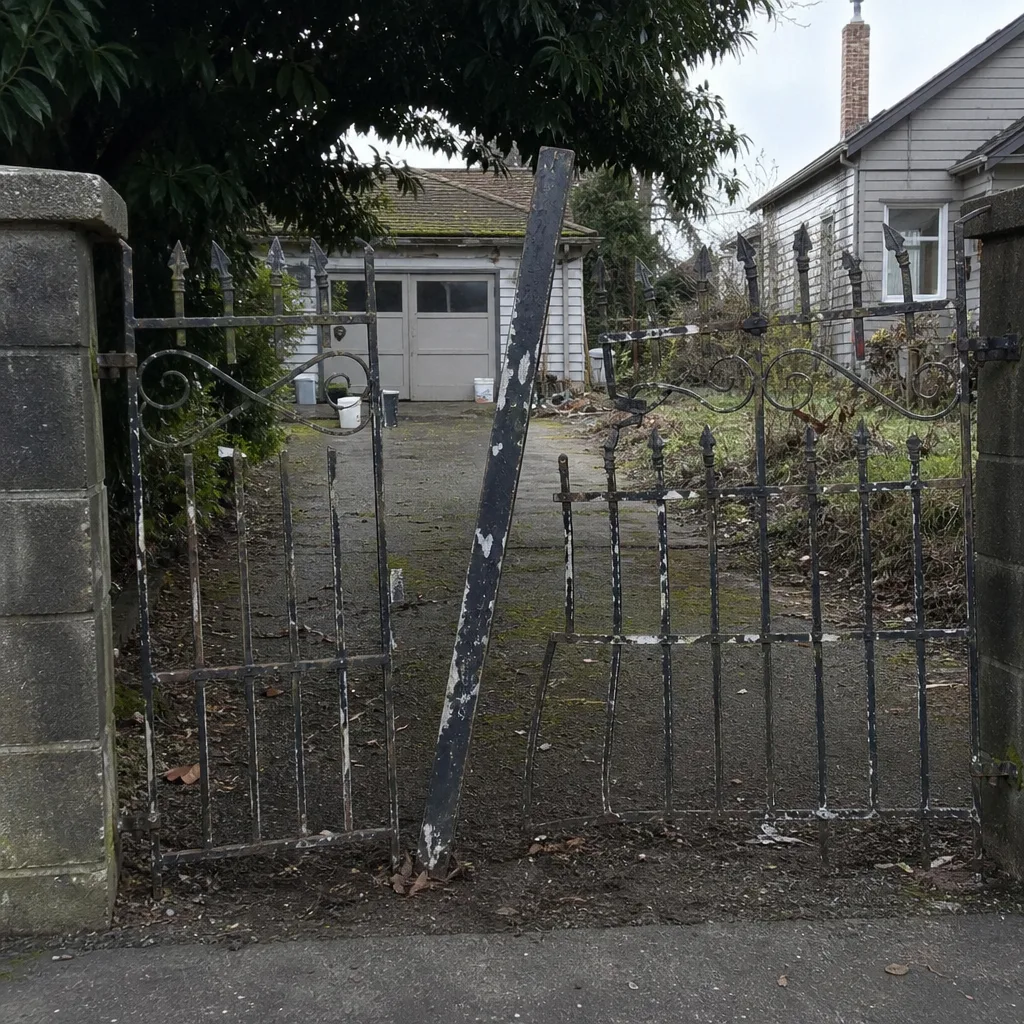 Before
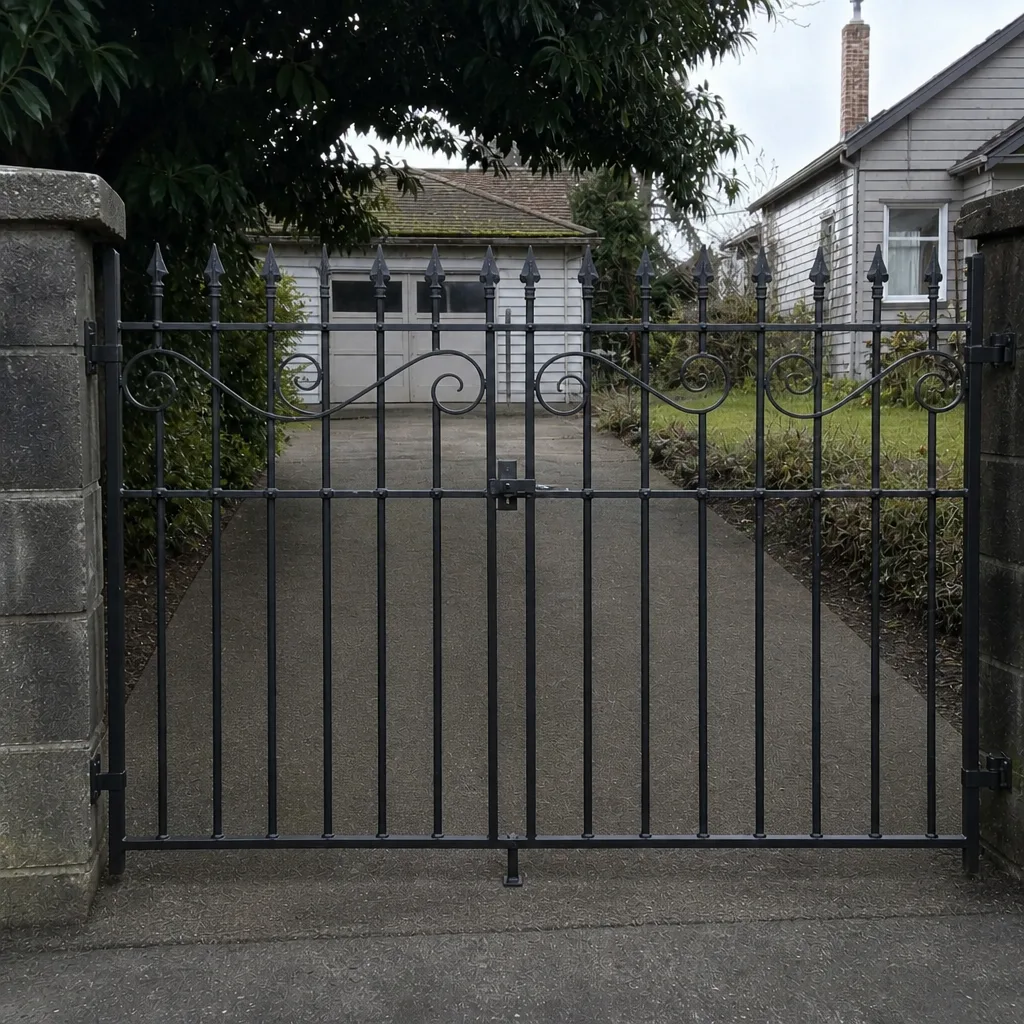 After
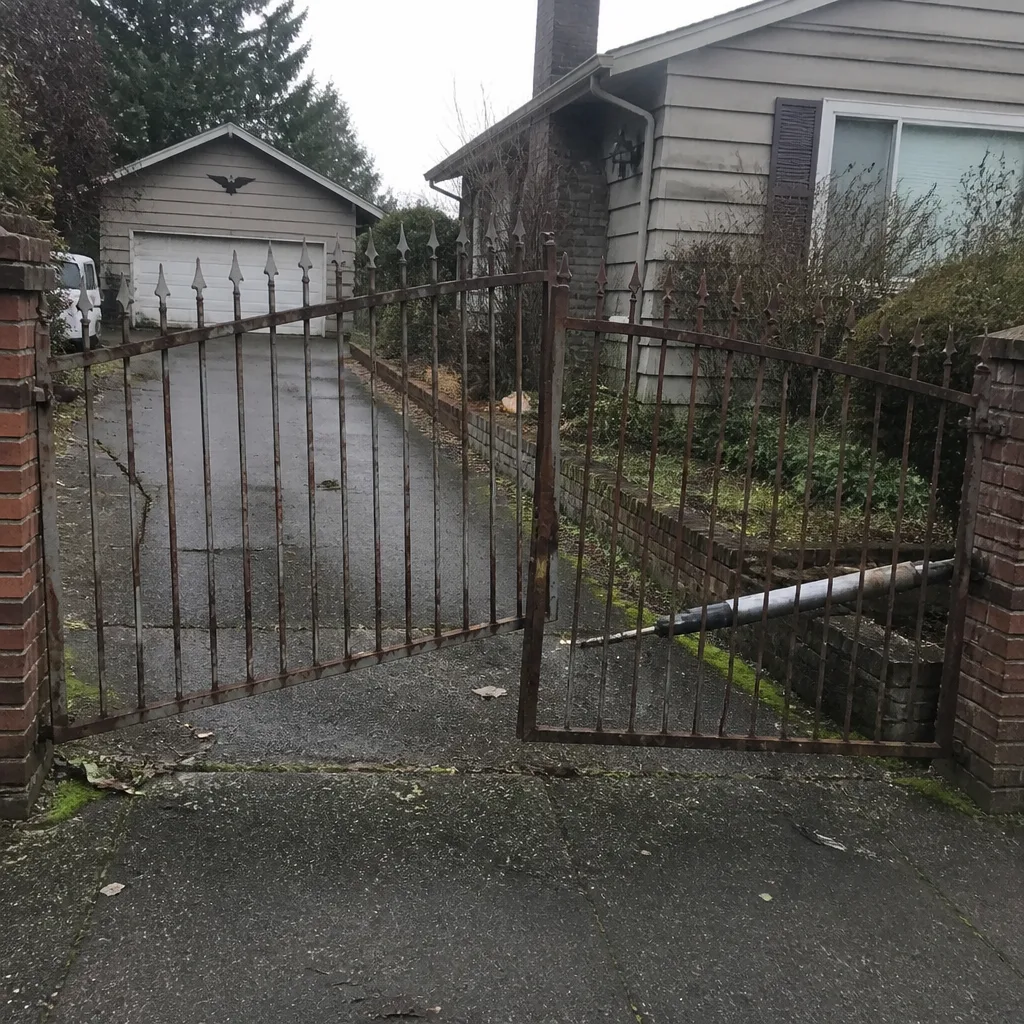 Before
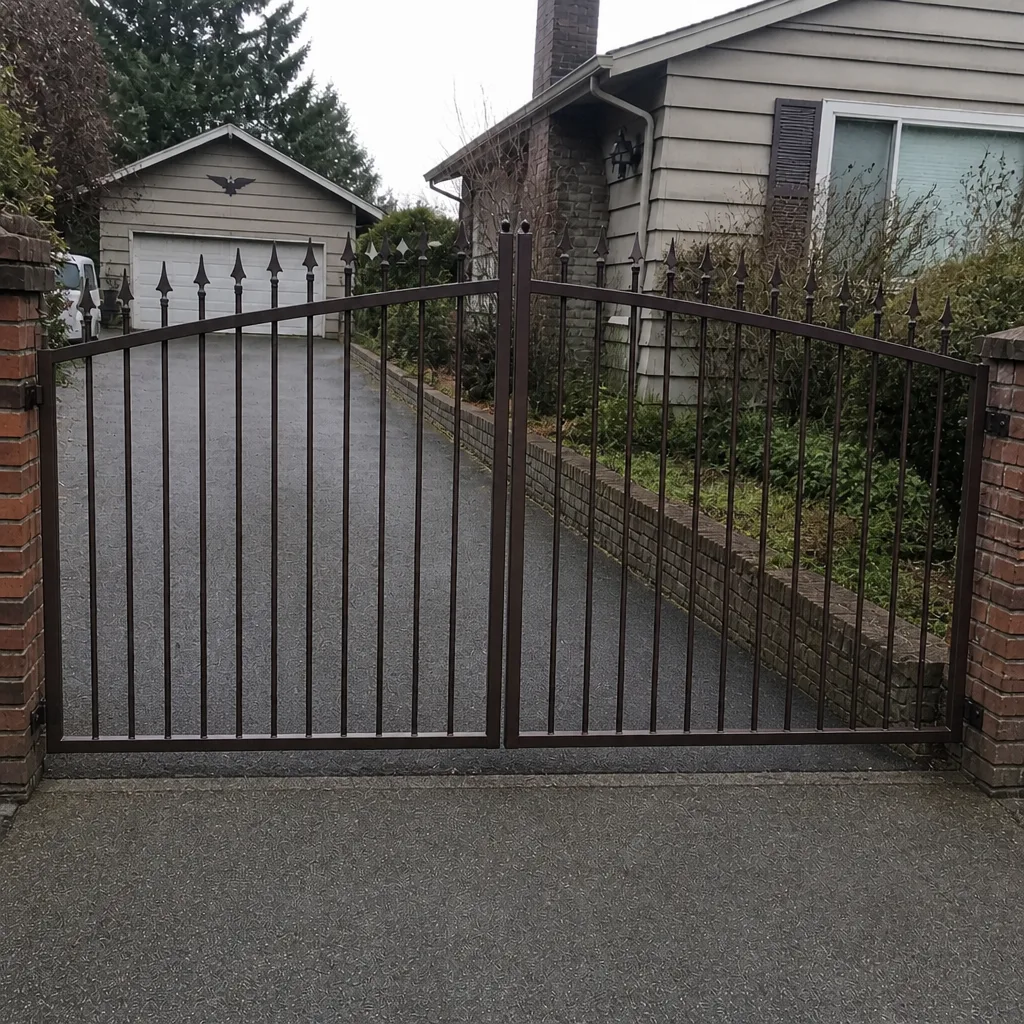 After
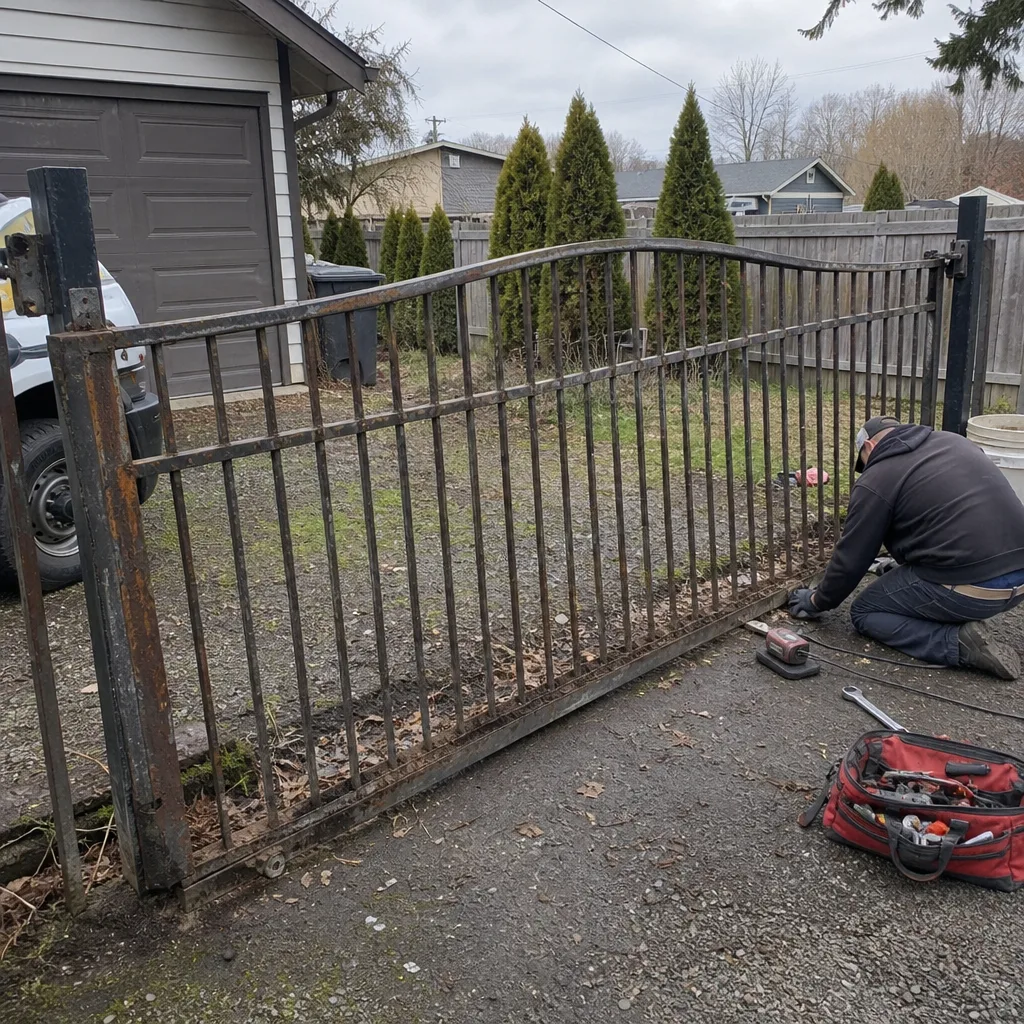 Before
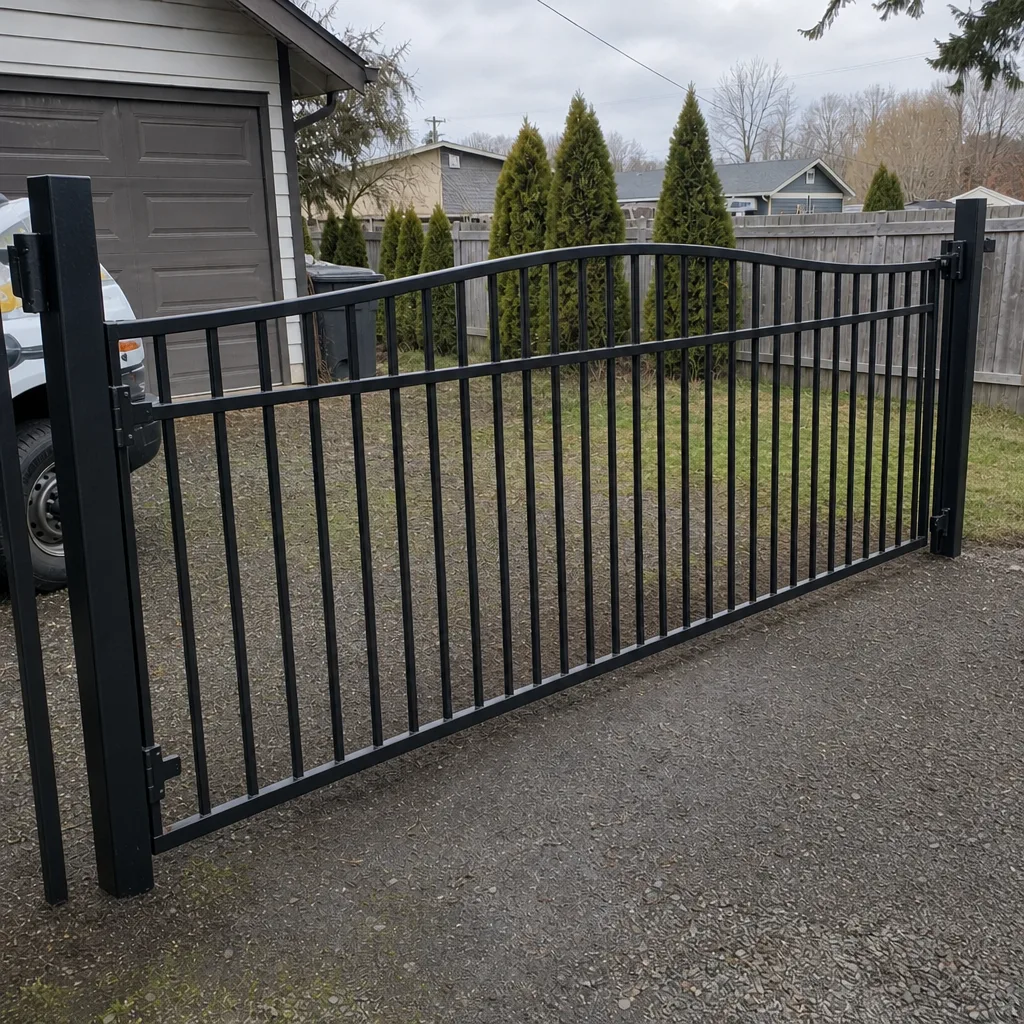 After
When to Call a Professional
Some gate problems are safe to check yourself: a dead operator with no lights on the board, a remote that won’t respond, a photo eye that’s clearly dirty. Call a professional when the diagnosis gets past the first few checks. Specific scenarios that need a trained technician:
- The gate has power but won’t move, and you’ve confirmed the operator isn’t in a lockout or error state.
- The auto-reverse test fails, or the gate shows any unsafe behavior during a close cycle.
- The gate is making grinding, scraping, or squealing sounds, which point to mechanical or alignment issues that will damage the operator if left alone.
- You’ve checked the power and signal categories and haven’t found the fault, which usually means the issue is in the control board or a wiring connection you can’t see.
- You have a commercial access gate with a DoorKing, FAAC, or BFT system, where the diagnostic patterns are more complex and the down-time cost is higher.
- The gate has shifted on its posts or track, which needs alignment work that can’t be done by hand.
Gate Repair Gresham offers free estimates in Gresham. Call (866) 942-6384. We answer 24/7. Fast dispatch from 7am to 7pm, Sunday through Friday. Whether you’re on a residential driveway or managing a commercial access gate, we can diagnose at the source and tell you what’s actually wrong before you spend on parts.
Frequently Asked Questions
A gate that opens but won’t close is almost always a safety device telling the operator to stop. Check the photo eyes first: dirt, spider webs, or a sensor knocked out of alignment will do it. If the eyes are clean and aligned, check the loop detector and the limit switch. Call (866) 942-6384 for an exact quote – estimates are free.
Gate operator repairs are priced per job after we’ve diagnosed the problem, and a written estimate sets the price before any work begins. The final cost depends on whether the issue is a connection, a safety device, a board, or a motor. That’s why we diagnose first and quote before starting. Call (866) 942-6384 for an exact quote – estimates are free.
Yes, same-day service is available. We answer 24/7, and fast dispatch runs 7am to 7pm, Sunday through Friday. A call outside dispatch hours is booked into the next opening, Sunday through Friday, 7am to 7pm. Call (866) 942-6384 for a free estimate.
Probably not. An intermittent gate almost always points to a loose wiring connection or a failing control board, not a failing motor. The gate “fixing itself” just before the technician arrives is the symptom, not bad luck. The diagnosis is worth having done carefully rather than by swapping parts. Call (866) 942-6384 for a free estimate.
We work on nearly every major gate brand, including LiftMaster, FAAC, BFT, Linear, Viking, Ghost Controls, DoorKing, Elite, and Mighty Mule. If you’re not sure what brand you have, the control board or operator housing usually identifies it. Call (866) 942-6384 for a free estimate and let us know what you’ve got.
Check three things before you call: whether the operator has power (any light on the control board), whether the safety devices are clear (photo eyes and loops), and whether the gate moves freely by hand with the operator disengaged. Those three checks tell you which of the four categories your problem falls into. If you’ve done them and haven’t found the issue, call (866) 942-6384 for a free estimate.
The Bottom Line
Gate repair troubleshooting in Gresham comes down to sorting the symptom into one of four categories: power, signal, mechanical wear, or alignment. Power problems are usually the transformer or the wiring. Signal problems are almost always a safety device doing its job. Mechanical wear shows up as noise and damages the operator if you ignore it. Alignment issues are the quiet ones that a two-minute hand test will find. The single most valuable habit is to diagnose before replacing anything, because the most expensive mistakes in this trade are the parts that weren’t broken. Our technicians have up to 8 years of experience across residential and commercial systems, and we can tell you what’s actually wrong. Call (866) 942-6384 for a free estimate. We answer 24/7. Fast dispatch from 7am to 7pm, Sunday through Friday.
Written by the team at Gate Repair Gresham.